Inequality made civilization possible.
Modern debate treats the gap between rich and poor as a problem to eliminate. We assume that more equality means a better society. History suggests something more complex.
From the pyramids of ancient Egypt to the Renaissance to Silicon Valley, humanity's greatest advances required concentrated wealth, and the freedom to deploy it. Inequality didn't just accompany progress. It helped drive it.
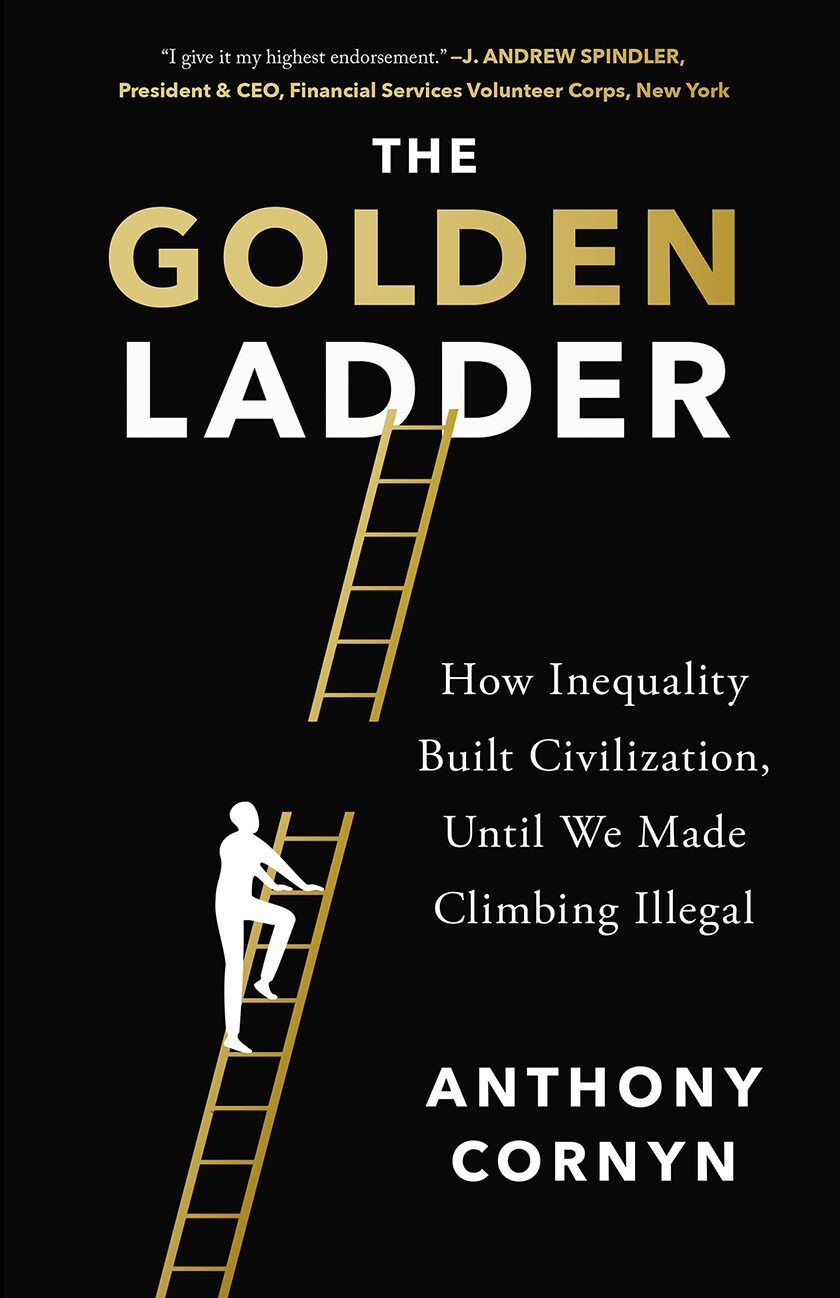
But not all inequality works the same way. When the rungs hold, wealth builds, fueling innovation, opportunity, and rising living standards. When they break, the system shifts from building to collecting. Barriers rise. Access replaces merit. Climbing gets harder.
In The Golden Ladder, Anthony Cornyn flips the switch. The issue isn't whether inequality is good or bad. It's whether it's still building, or whether lobbying, regulation, and gatekeeping have turned it into a system that protects those at the top.

Join hundreds of authors who have published with Houndstooth.
Work With Us